
“Seeing how other people got better, that’s where the change happened. In my head.”
Charles arrived at KPEP’s Battle Creek facility in November 2024 knowing exactly what he needed to do. Getting there had taken most of his adult life.
Now a journeyman machinist, he grew up mechanically gifted. He was the kind of person who can look at a broken machine and see the solution before anyone else does. He got into drugs young but got clean in his mid-twenties and stayed that way for nearly a decade. He had a good life, a woman he loved, and a future he could see clearly.
Then, in 2013, a motorcycle accident changed everything. Charles was badly injured and left with a titanium rod in his femur, pins in his ankle, and plates in his arm. His fiancée didn’t survive. At 32, he didn’t know how to carry that kind of loss.
“I didn’t know how to respond,” he said. “I didn’t want to respond. I went back to drugs.”
Within a year of constant use, he was arrested for possession with intent to distribute and sentenced to federal prison. He served 11 years.
Prison was its own kind of darkness. But somewhere in those years, something shifted — not because of a program or a counselor, but because Charles started watching the people around him.
“I have several friends who were drug addicts and are successful now,” he says. “Seeing how other people got better, that’s where the change happened. In my head.”
By the time he walked out of prison on November 12, 2024, he was ready.
Structure, Support, and Someone in His Corner
Federal guidelines sent Charles directly from prison to KPEP where he spent six months in the residential program before transitioning to home confinement. He didn’t arrive looking to be saved. He arrived with a plan.
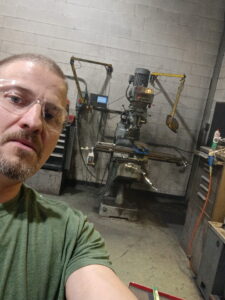
What KPEP gave him was the structure and support to execute his plan and a counselor who made a real difference.
“Kyle Stephens. He helped me with everything in his power,” Charles says. “When I needed to get my driver’s license sorted out, when I needed boots, he was there. He didn’t judge anybody. He genuinely cared and genuinely wanted to help.”
Charles is candid about the contrast. Prison staff, he says, were often indifferent or worse. Kyle was different. He was the kind of person who reminded Charles that the people on his side of the system could actually be on his side. He knew Kyle recognized a truth that many in the penal system do not.
“Not everyone who does bad things is a bad person,” Charles says. “You give someone something to be proud of, something to do, and they thrive.”
A Life He Built Himself
Charles is a journeyman machinist at Brembo, one of the world’s leading brake manufacturers. The company’s components are used in Formula 1 race cars. He takes pride in his work and puts in between 36 and 84 hours a week. He chooses the long hours.
“It’s one of the most amazing jobs I could have coming out of prison,” he says. “Being able to support myself—I have no problem working hard.”
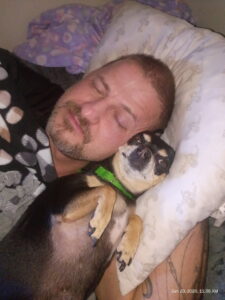
He spent the past year working, saving, and building his credit. In January 2026, he bought a house. Three months later, a tornado hit. He and his girlfriend sheltered in place as the roof blew off. He laid on top of her as the walls came down around them. The house was destroyed, but they made it out. So did all six of their Chihuahuas.
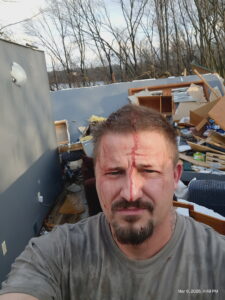
“I just thought, I’m thankful to be alive,” he says.
In June, he found a house he loves—twelve minutes from work, an acre of land, a basement and a garage. Out in the country, the way he grew up. He made a cash offer and is waiting to close. “Hard work will pay off,” he states simply.
Charles still reports to KPEP’s Battle Creek location for drug testing as part of his probation. He doesn’t mind. He hasn’t been high since June 2014, and he is certain he’ll never go back to that life.
“I know what I want out of life,” he says, “and I know I can achieve it.”